Every day, we eat our meals and use the toilet without giving much thought to what happens afterward.
Human waste is commonly regarded as something to dispose of. Yet it also contains valuable nutrients that originally came from the food we eat.
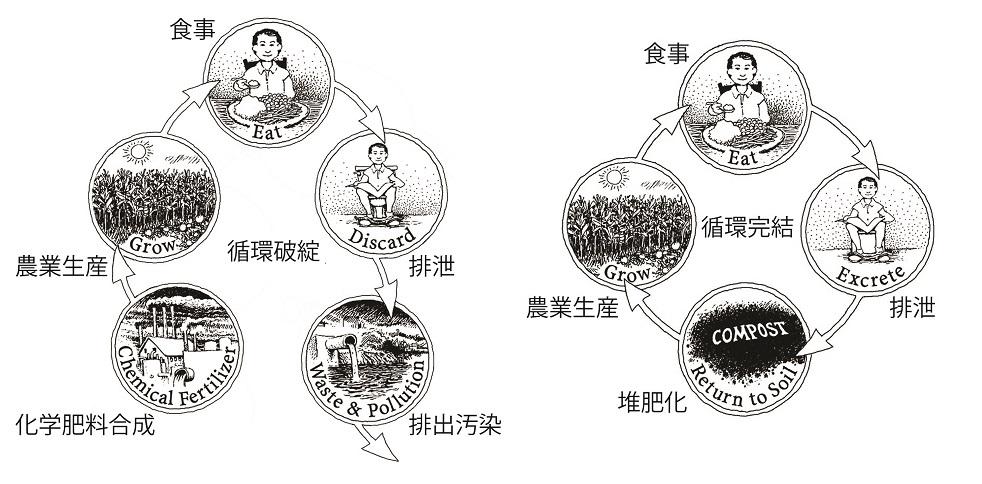
When those nutrients are removed from nature instead of being returned to the soil, an important natural cycle is broken. According to The Humanure Handbook and its accompanying materials, restoring this nutrient cycle is an important step toward more sustainable food production.
A Broken Nutrient Cycle
Plants absorb nutrients from the soil, animals and people consume those plants, and nutrients are naturally returned to the earth.
In modern society, however, much of the nutrients contained in human waste are carried away through wastewater systems rather than being recycled back into agricultural soils.
As a result, the natural cycle that once connected food production and the environment has been interrupted.
Understanding Eutrophication
One environmental issue associated with excess nutrients is eutrophication.
When too much nitrogen and phosphorus enter rivers, lakes, and coastal waters, algae can grow rapidly. These algal blooms may reduce oxygen levels in the water and harm aquatic ecosystems.
The source material explains that nutrient runoff from agriculture and nutrients discharged through wastewater systems both contribute to this global environmental challenge.
From Disposal to Recycling
Around the world, researchers and practitioners have explored ways to safely process human waste into compost that can be returned to the soil.
Rather than viewing human waste only as something to discard, this approach considers it a resource that contains nutrients essential for growing future crops.
When managed safely, nutrient recycling has the potential to reduce waste while helping conserve valuable natural resources.
Food Production and Environmental Sustainability
Every harvest removes nutrients from agricultural soils.
Replacing those nutrients is essential for long-term food production, but how we do so also affects the environment.
Creating food systems that both produce healthy crops and reduce environmental impacts is becoming increasingly important. Restoring nutrient cycles is one possible approach discussed in The Humanure Handbook.
Learn More
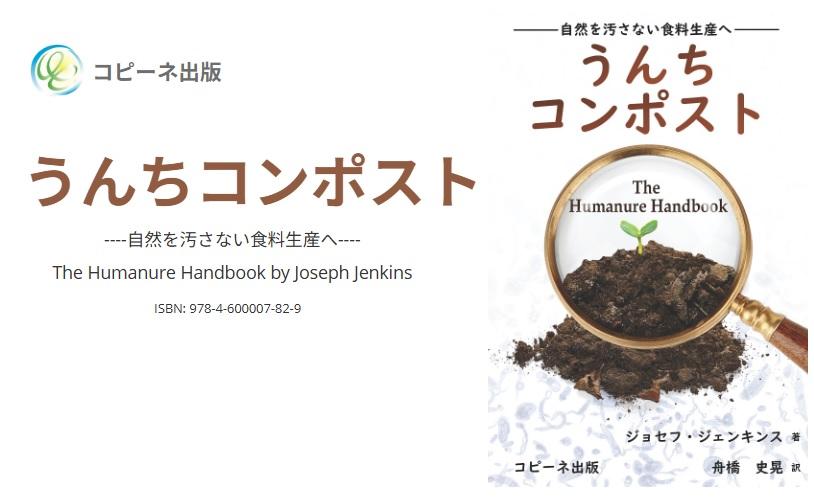
The ideas introduced in this article are explored in greater depth in The Humanure Handbook by Joseph Jenkins.
Drawing on more than forty years of research and practical experience, the book discusses methods for safely composting human waste and examines how nutrient recycling may contribute to sustainable food production and environmental protection.
Rather than focusing solely on waste management, it encourages readers to think about a broader question: How can we restore the natural cycle of nutrients between people, agriculture, and the environment?
Take a look at the HumanureHandbook